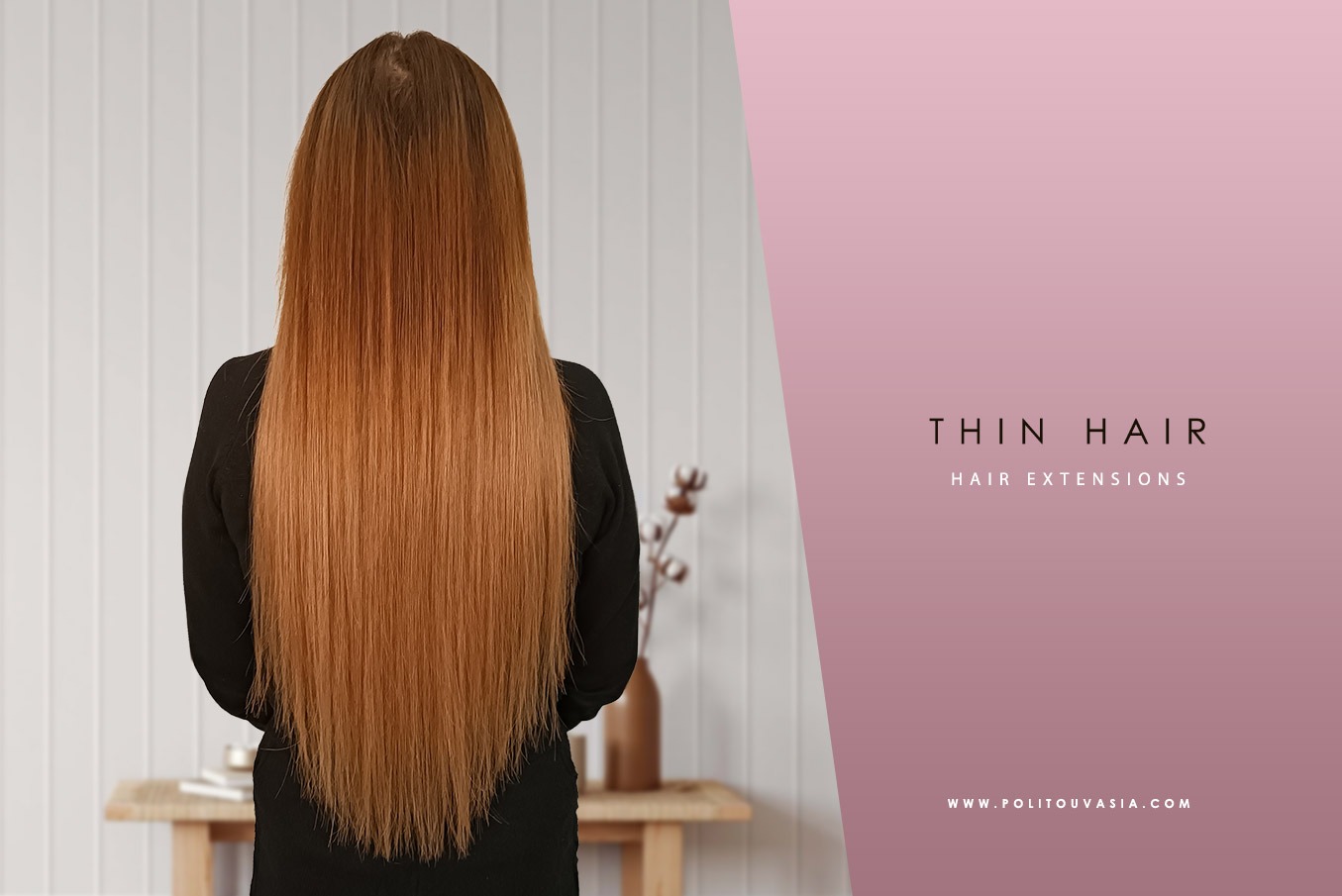
Extensions for Fine Hair: The Safest Choice
The complete guide to extensions for fine hair: nano rings, micro rings, ultra-thin tape-ins and small keratin bonds — what to choose for fine/fragile hair, how many grams you need, and how to care for them without damage. New to extensions? Read what hair extensions are.
Why fine hair needs a special approach for extensions
With fine hair, the hair shaft is thinner and the root more delicate; any extra weight or incorrect technique increases the risk of traction and breakage. The goal: volume/length with minimal load at the root.
The safest extensions for fine hair
Nano ring extensions for fine hair (no heat/glue)
- What it is: Tiny beads that “hug” each strand.
- Why it’s safe: Very low weight per point, easy maintenance/removal without chemicals.
- Best for: Sparse, very fine hair.
Lightweight micro ring extensions for fine hair
- What it is: Same concept as nano, with a slightly larger bead.
- Safety tip: Use many small strands (≈0.6–0.8 g), never a few heavy ones.
Note: Ultra-light hand-tied wefts can work in selected cases, but we usually prefer nano/micro for maximum safety.
Quick decision checklist for extensions on fine hair
- Volume + length: nano or micro with very small strands.
- Sensitive scalp: get assessed first; postponement may be advised.
- Swim/work out often: choose rings (easier refits).
- Maintenance time: plan refits every 6–8 weeks.
How many grams of extensions for fine hair do I need?
- Volume only: 50–80 g
- Volume + length (fine hair): 80–120 g
- Full transformation: after in-person assessment
These figures are indicative; the right plan follows a live consultation.
Maintenance & care for extensions on fine hair
- Refit: every 6–8 weeks (nano/micro).
- Brushing: morning/evening with EXbrush by Vasia Politou, supporting the roots.
- Washing: silicone-free shampoo; apply conditioner from mid-lengths to ends.
- Heat tools: always use a heat protectant serum; never apply directly on attachment points.
- Sleep: loose braid/low pony; avoid tight styles and sleeping with wet hair.
- Sea/pool: rinse afterwards and use a gentle mask on the lengths.
Common mistakes with extensions on fine hair
- Too much weight on a fine base.
- Large bonds/heavy tapes on a sensitive root.
- Delaying refits → sliding down & traction.
- Harsh brushing and tight hairstyles.
Extensions for fine hair: comparison table
| Method | Heat/Adhesive | Weight per point | Maintenance | Visibility | Ideal for fine hair |
|---|---|---|---|---|---|
| Nano rings | No/No | Very low | 6–8 wks | Minimal | ⭐⭐⭐⭐⭐ |
| Micro rings (light) | No/No | Low | 6–8 wks | Low | ⭐⭐⭐⭐ |
| Tape-in (ultra-thin) | No/Yes | Medium | 6–8 wks | Low | ⭐⭐ |
| Keratin bond | Yes/Yes | Medium | 3–4 months | High | ⭐ |
FAQ
Are extensions safe for fine hair?
Yes, when applied with lightweight materials, small units and regular maintenance after a proper assessment.
Do they hurt or feel heavy?
No. If you feel pulling, ask for an immediate adjustment.
Can I swim or work out?
Absolutely. Rinse after sea/pool and take extra care at the roots.
How long do they last?
Micro/Nano rings are refitted every 6–8 weeks; other methods aren’t refitted — they’re replaced every 3–4 months.
How much do they cost?
It depends on method, length and grams; you’ll get an exact quote after a consultation.